A cosmetic clinic can generate enquiries through search, social media, referrals, and paid advertising, yet still lose prospective patients before they book. The problem is often not demand; it is cosmetic clinic lead follow-up. A delayed, vague, or inconsistent reply creates uncertainty—and gives another clinic the opportunity to respond first.
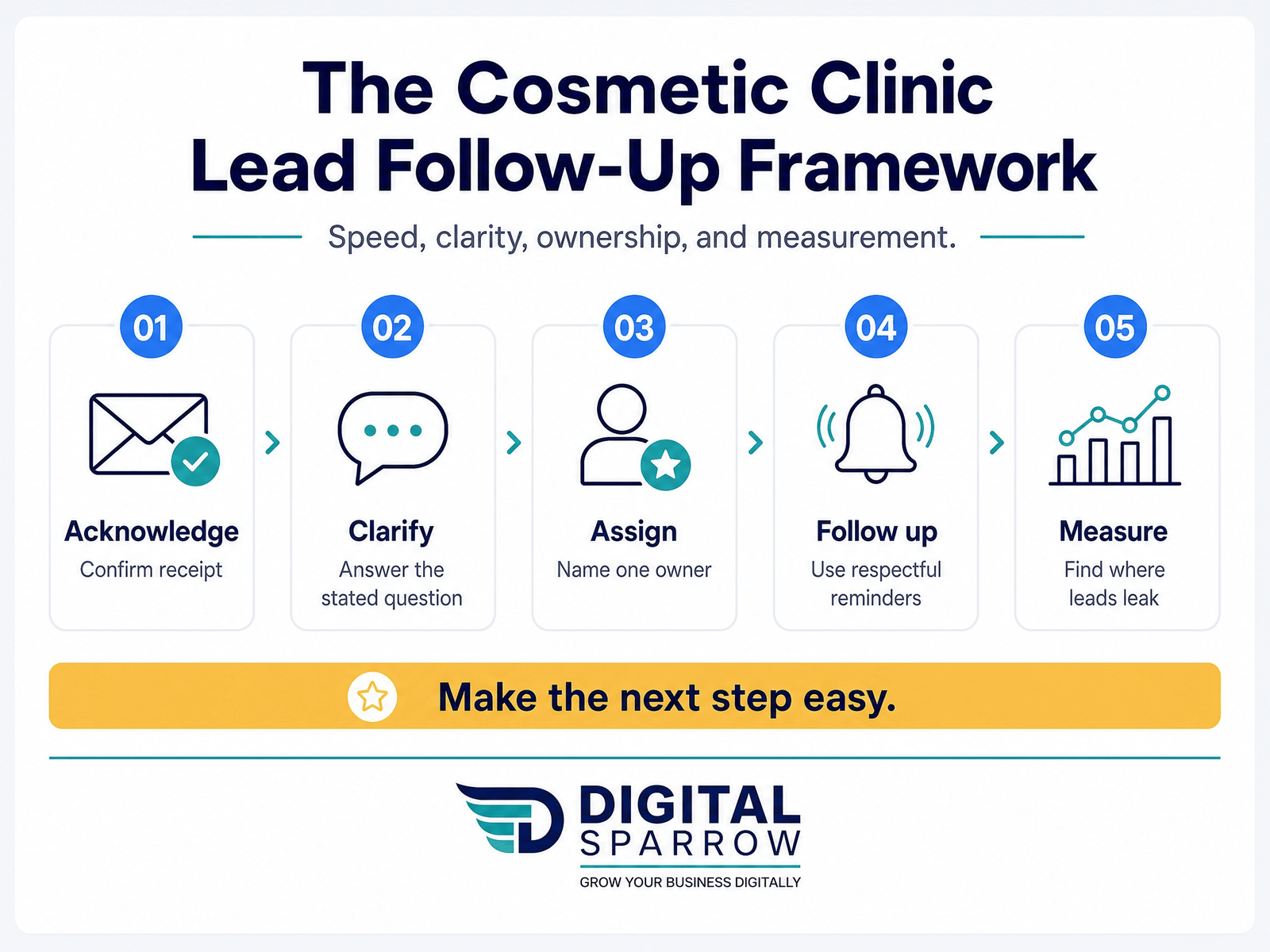
A better approach is to design follow-up as a patient-experience system, not an occasional sales task. The goal is to acknowledge the enquiry quickly, answer the next obvious question, and make the consultation step simple without pressuring the person.
Why slow follow-up costs more than a missed message
People considering an aesthetic procedure are usually comparing trust, convenience, safety, expertise, and price. They may also feel nervous about sharing personal information. A response that arrives much later—or only says “Please call us”—forces the prospective patient to do more work at exactly the moment they need reassurance.
Research published by Harvard Business Review found that companies often followed up too slowly on online sales leads and that response speed affected contact and qualification outcomes.1 The study was not specific to cosmetic medicine, so it is not a clinic conversion guarantee. Its practical lesson is relevant: a lead should enter a defined response workflow immediately, rather than wait in a personal inbox or WhatsApp thread.
Build the first five minutes around clarity
Your first response does not need to be a long explanation. It needs four useful elements:
•Acknowledge the person by name, if provided.
•Confirm the treatment or question they asked about.
•Set a realistic expectation for the next response or call.
•Offer one clear route to continue, such as choosing a consultation time.
For example: “Thank you for enquiring about laser treatment, Priya. Our coordinator will answer your questions and help you choose a suitable consultation. Would today at 4 pm or tomorrow at 11 am be more convenient?”
This message is specific without making a clinical promise. Do not use automation to diagnose, recommend a procedure, or imply that a doctor has personally reviewed the enquiry.
Create a follow-up sequence, not a single reminder
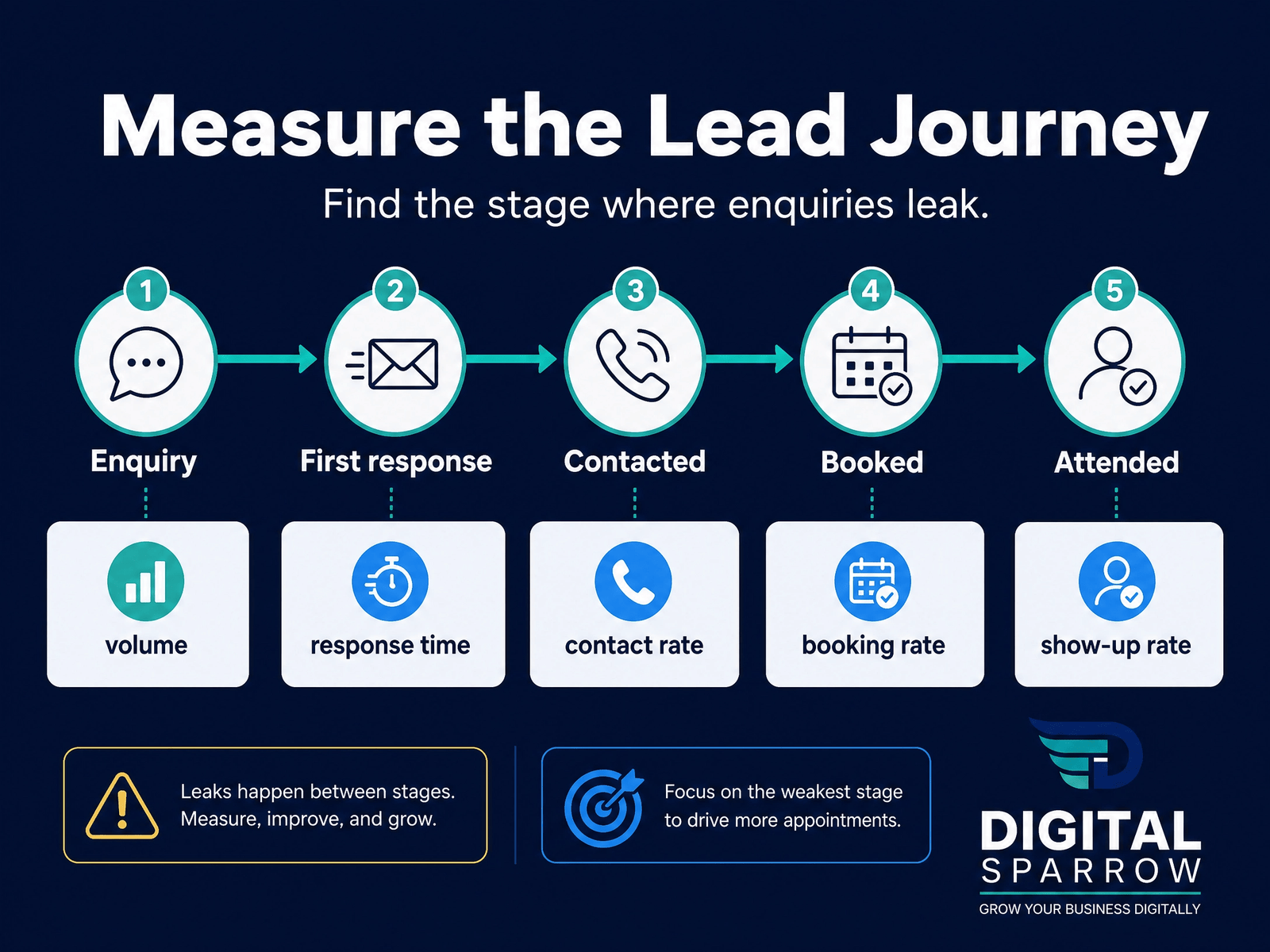
A useful workflow separates speed, education, and human contact. After the first acknowledgement, assign the enquiry to one owner and record its stage: new, contacted, booked, attended, or not proceeding. Define what happens next if the person does not reply.
A simple sequence could include a same-day personal message, an answer to the stated question, and a next-day reminder that makes it easy to choose a time. A later message can invite questions or acknowledge that the person is not ready. Repeated “Just following up” messages add pressure without adding value.
Use approved templates for common questions, but allow a trained team member to personalise the conversation. AI for small businesses can support message routing, reminders, and information capture, while clinical judgement and sensitive conversations should remain with appropriately trained humans.
Measure the journey to consultation
Do not judge the workflow only by the number of leads received. Track the stages that reveal where the system breaks:
•Time from enquiry to first acknowledgement.
•Percentage of enquiries receiving a human response.
•Contact rate and consultation-booking rate.
•Booked-to-attended consultation rate.
•Common reasons for delay, non-response, or cancellation.
Review these measures by channel and treatment type. Ads may be performing adequately while weekend enquiries, missed calls, or unclear booking instructions cause the real leakage. Follow-up belongs beside marketing reporting, not outside it.
Turn follow-up into a trust signal
Fast follow-up is not about rushing a patient into a procedure. It shows that the clinic is organised, attentive, and easy to reach. Keep claims accurate, explain what a consultation can and cannot determine, and protect personal information. Google advises verified businesses to reply to reviews clearly, professionally, and relevantly.2
Start by auditing one week of enquiries. Measure response time, identify unclear ownership, and write three approved first-response templates. If the clinic needs help connecting enquiry handling with marketing and automation, explore Digital Sparrow’s digital marketing services or AI systems for small businesses. A stronger follow-up process can improve the experience before additional ad budget is considered.